What is Seagrass?
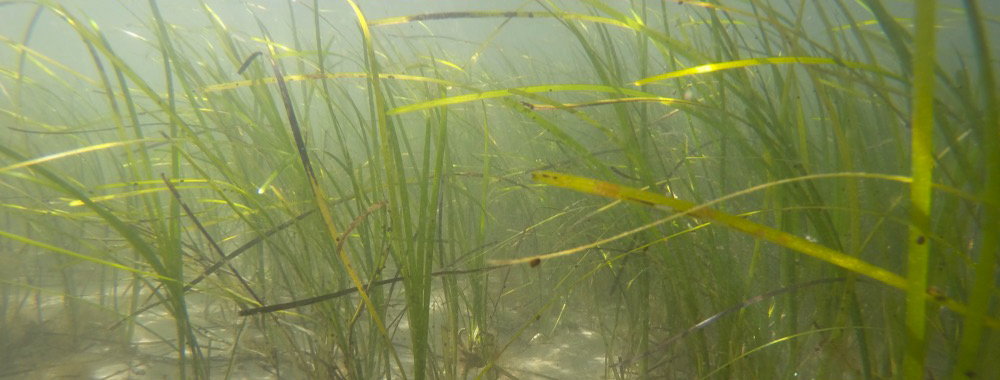
Eelgrass, or Zostera marina, is a marine angiosperm – that is, a flowering plant that lives in the sea. Eelgrass forms dense, monospecific stands that sequester carbon and support a diverse community of fishes and invertebrates in nearshore temperate regions worldwide. One reason why Z. marina and other seagrasses are important is that they act as marine foundation species : their presence defines a whole community type (like kelp in a kelp forest, or corals on a coral reef). Foundation species provide structural support and habitat complexity for associated organisms, and modify the abiotic environment in ways that promote biodiversity. For example, the physical structure of Z. marina leaves slows the flow of water movement through an eelgrass meadow, thus increasing the settlement of fine particulate matter and increasing water clarity; the roots and rhizomes of eelgrass also helps stabilize the sediments and prevents erosion. This can create a positive feedback loop: once eelgrass is established, its presence makes the habitat better for eelgrass growth and survival. Conversely, when eelgrass is lost (due to stressors like disease, coastal development, or nearshore pollution), it can be difficult to restore. Because of the many Ecosystem Services that eelgrass provides in New England and elsewhere, protecting eelgrass is conservation priority.